Mardi Himal & Poon Hill Combined Trek 12 Days: Itinerary, Cost, Map & Guide
The 12-day Mardi Himal & Poon Hill Trek combines two contrasting trekking experiences in Nepal’s Annapurna region: the classic Ghorepani route and the quieter Mardi Himal ridge. Start with sunrise views over the Himalayas from Poon Hill (3,210 m) , then continue toward the Mardi Himal Upper Viewpoint (4,200 m) for a closer look at Mardi Himal, Machhapuchhre (Fishtail) and the surrounding Annapurna peaks. The route takes you through rhododendron forests, traditional Gurung villages, and popular stops such as Ghorepani and Ghandruk before moving into the more remote highlands of Mardi Himal. After following the narrow ridge above the treeline, you descend through Siding and return to Pokhara. Combining both routes gives you mountain panoramas, village life and quieter trails in a single itinerary. This trek is best for travelers with reasonable fitness who can manage eight consecutive walking days , steep stone steps and sustained uphill climbs. There is no scheduled rest day, so steady pacing is important. Note that this itinerary reaches the Mardi Himal Upper Viewpoint, not Mardi Himal Base Camp (approximately 4,500 m) .
- Kathmandu
- Kathmandu
- 12 Days
- 4,200 m
- Easy
- 14
- Hotel, Teahouses
- Breakfast, Lunch, Dinner
Highlights
- Watch sunrise from Poon Hill: Climb to 3,210 m for first light on Dhaulagiri and the Annapurna range.
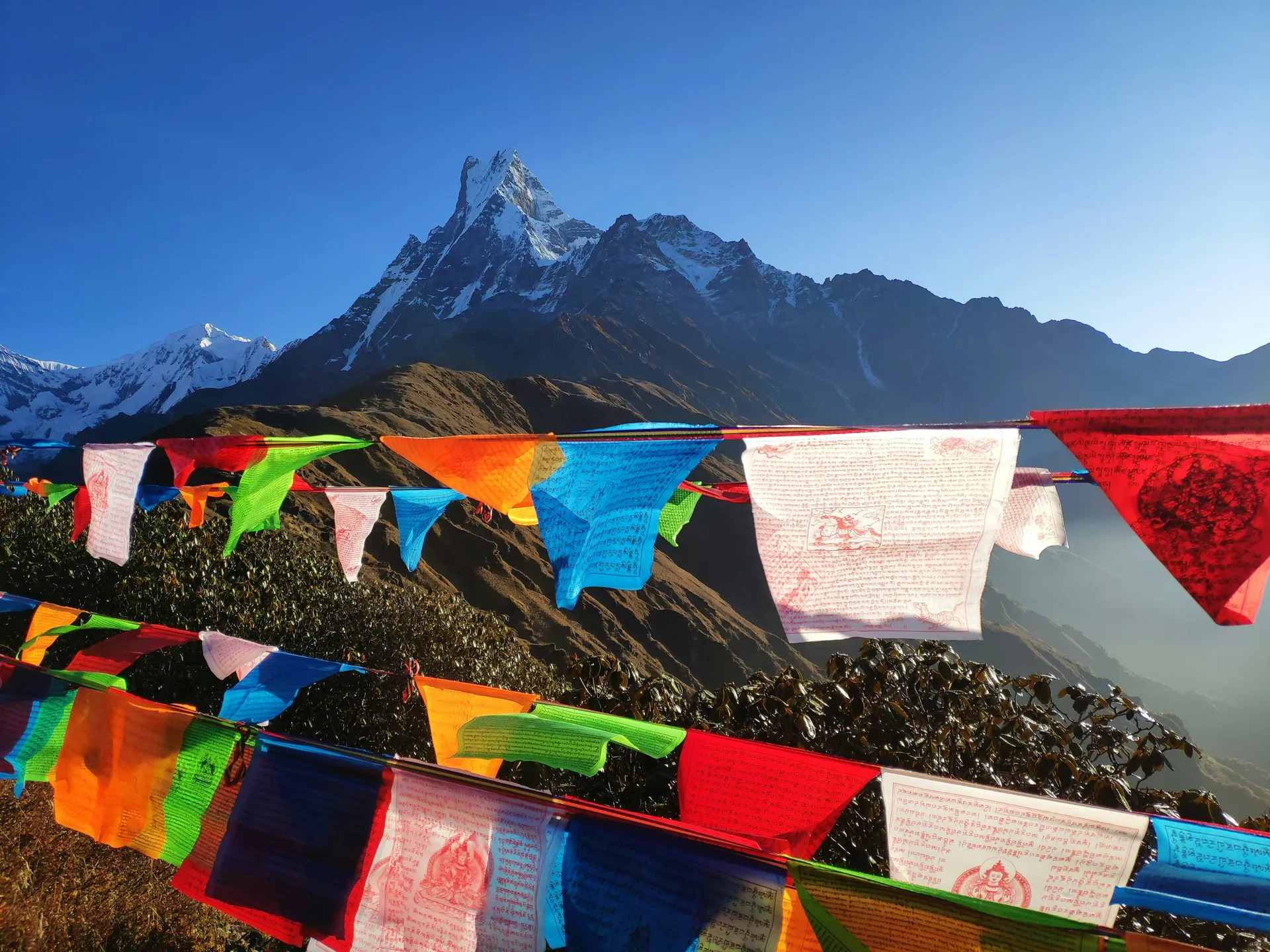
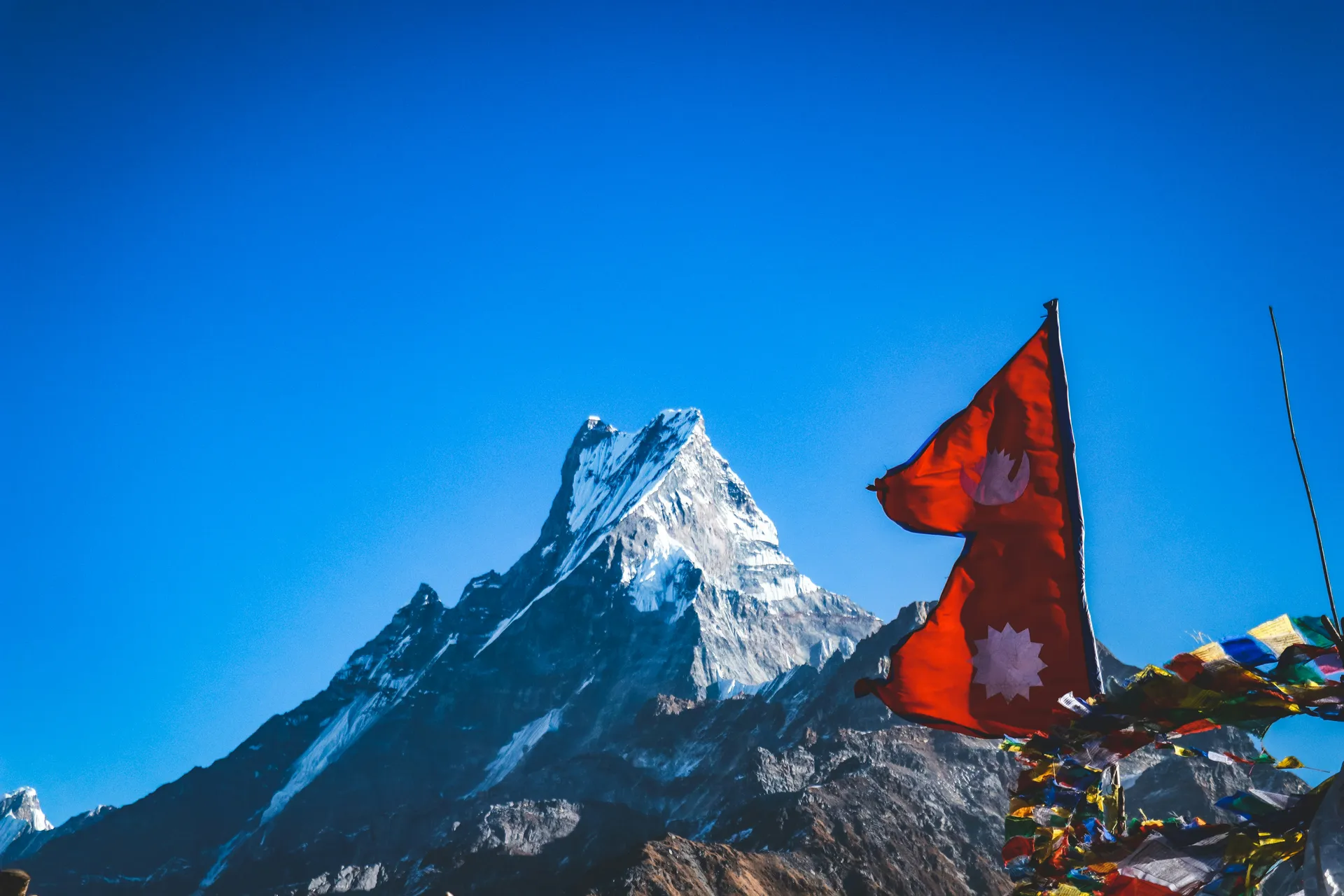
- Reach the Mardi Himal Upper Viewpoint: Hike to 4,200 m for close views of Mardi Himal and Machhapuchhre at sunrise.
- Climb the Ulleri steps: Take on one of Nepal's most famous stone staircases, which winds up through terraced hillside.
- Walk through rhododendron forest: Pass through oak and rhododendron woods that bloom red and pink in spring.
- Visit Ghandruk: Explore one of the largest Gurung villages in the region, with stone houses and mountain views.
- Follow the Mardi ridge: Walk the high ridge from Low Camp to High Camp, with the mountains opening up as you climb.
- Stay at Badal Danda: Spend a night on the "cloud ridge", with views over the valley when the clouds clear.
- Descend via Siding: Below Forest Camp, you leave the trail you climbed and come down through Siding, so the last stretch is new ground.
Itinerary
Day 1: Arrival in Kathmandu (1,400 m)
Arrive at Tribhuvan International Airport, where our representative will meet you and take you to your hotel. After checking in, you can rest or wander the nearby streets, depending on when you land.
In the evening, you'll meet your guide over a welcome dinner. Your guide will walk you through both halves of the trek, the permits, and what to expect on the viewpoint day. If you need last-minute gear, Thamel's trekking shops are close by.
- Hotel
- Welcome Dinner
Day 2: Drive from Kathmandu to Pokhara (822 m)
After breakfast, you leave Kathmandu and follow the Prithvi Highway west through river valleys. The road passes small bazaars, terraced hills and roadside tea stops, and the air gets warmer as you near Pokhara.
You'll arrive in the afternoon, with time to walk by Phewa Lake or rest. On a clear evening, the Annapurna range stands on the horizon, a preview of what's ahead.
- 6-7 hours
- Hotel
- Breakfast
Day 3: Drive from Pokhara to Birethanti and Trek to Ulleri (1,960 m)
A short drive takes you from Pokhara to Birethanti, a riverside village where permits are checked and the trek begins. The trail follows the Bhurungdi River through Tikhedhunga, then starts the long climb up the stone steps to Ulleri.
It's a steep, steady ascent through terraced fields and small farming villages. The steps feel endless in the afternoon, but take them slowly, rest often and look back now and then, since the views over the valley get wider with every turn. Ulleri sits on a ridge, and it's a good place for your first night on the trail.
- 7-8 hours
- 10km
- Teahouse
- Breakfast, lunch, dinner
Day 4: Trek from Ulleri to Ghorepani (2,880 m)
The trail leaves Ulleri and climbs gently through Banthanti and Nangethanti, passing in and out of thick forest. Moss hangs from the trees, and in spring the rhododendrons light up the hillside. The way is easier than yesterday, with fewer steps and more shade.
Ghorepani is a busy village at the head of the ridge, with plenty of teahouses and a lively dining-room scene in the evening. On a clear afternoon, you may see Dhaulagiri and Annapurna South from the terrace. Go to bed early, since tomorrow starts before sunrise.
- 5-6 hours
- 11 km
- Teahouse
- Breakfast, lunch, dinner
Day 5: Hike to Poon Hill (3,210 m) for Sunrise and Trek to Tadapani (2,630 m)
You'll wake in the dark and climb to Poon Hill in about an hour, with a headtorch and a warm jacket. The viewpoint is crowded, but once the sun rises, nobody minds. Dhaulagiri, Tukuche Peak, Nilgiri, Annapurna South and Machhapuchhre light up one after another across a wide sweep of the horizon.
After breakfast back in Ghorepani, the trail climbs to Deurali pass and then drops into a long stretch of rhododendron and oak forest toward Tadapani. This is one of the prettiest walks of the trek, quiet and mossy, with a good chance of seeing langur monkeys and birds. Tadapani sits on a ridge with views of Annapurna South and Machhapuchhre.
- 7-8 hours
- 12km
- Teahouse
- Breakfast, lunch, dinner
Day 6: Trek from Tadapani to Landruk via Ghandruk (1,565 m)
Today is a long downhill day, and a cultural one. From Tadapani, you follow the trail down to Ghandruk, a large Gurung village of stone houses and slate roofs. If you have time, stop at the Gurung museum and walk through the lanes, where the mountains rise right behind the rooftops.
After Ghandruk, the path continues down terraced slopes and across streams to Landruk, a smaller village in a warm, green valley. The climate changes quickly after the cold of Ghorepani, and the downhill is steep, so poles and good boots help.
- 5-6 hours
- 13 km
- Teahouse
- Breakfast, lunch, dinner
Day 7: Trek from Landruk to Low Camp (3,050 m) via Forest Camp
Today you leave the Ghorepani trail and join the Mardi Himal route. The trail climbs steadily from Landruk through farmland and then into dense forest, passing Pothana and Pitam Deurali before reaching Forest Camp. It's the biggest climb of the trek, and you gain almost 1,500 m by the end of the day.
From Forest Camp, the last stretch to Low Camp is shorter but steep, through mossy rhododendron forest. The trees thin out as you near the camp, and the first big views open up. Low Camp is a simple, quiet stop, and it's a good place to rest your legs.
- 7-8 hours
- 13 km
- Teahouse
- Breakfast, lunch, dinner
Day 8: Trek from Low Camp to High Camp (3,580 m) via Badal Danda
You climb out of the last of the forest and onto the open ridge. The first stop is Badal Danda, whose name means "cloud ridge", and which often lives up to it as clouds roll in. On a clear morning, you'll see Annapurna South, Hiunchuli and Machhapuchhre rising ahead of you.
The final climb to High Camp follows a narrow ridgeline, with the valley falling away on both sides. The teahouse is simple and cold at night, but the evening view of Mardi Himal and Machhapuchhre is worth the effort. Rest early, because tomorrow starts well before dawn.
- 4-5 hours
- 5 km
- Teahouse
- Breakfast, lunch, dinner
Day 9: Hike to Mardi Himal Upper Viewpoint (4,200 m) and Descend to Badal Danda
You'll leave High Camp around 3-4 AM with a headtorch, warm layers and a hot drink. The trail climbs along an exposed ridge above High Camp, and it's steep and slow. Take it one step at a time, follow your guide's pace and keep your breathing steady. The walk to the Upper Viewpoint typically takes around 2.5-3 hours, depending on conditions.
By the time the sky starts to brighten, you're near the top. From the Upper Viewpoint at 4,200 m, Mardi Himal, Machhapuchhre, Annapurna South and Hiunchuli stand in front of you in a single frame. It's the high point of the whole trek, in every sense.
After you've taken your photos, head back down to High Camp for breakfast, then continue the descent to Badal Danda, where you spend the night.
- 6-7 hours
- Teahouse at Badal Danda
- Breakfast, lunch, dinner
Day 10: Trek to Siding and Drive to Pokhara (822 m)
Today is your last day on the trail. From Badal Danda, you walk down through Low Camp and Forest Camp, where you stop for lunch. Below Forest Camp, you leave the trail you climbed on Day 7 and descend to Siding, a village of stone paths with valley views, so the last part of the walk is new ground.
At Siding, a vehicle will be waiting to take you back to Pokhara. After a week and a half of teahouses, a hot shower and a soft bed are a treat. Spend the evening by the lake and celebrate.
- 11-12 hours
- Hotel
- Breakfast, lunch
Day 11: Drive from Pokhara to Kathmandu (1,400 m)
The trek is behind you, and today is for the road home. The highway follows river valleys and green hills, and it's a good time to scroll through your photos. If you'd rather skip the drive, you can fly for about 25 minutes. Flights depend on the weather, so keep your plans flexible if you choose this.
You'll reach Kathmandu in the afternoon, and the rest of the day is free for shopping, a farewell dinner or resting.
- 6-7 hours
- Hotel
- Breakfast
Day 12: Departure from Kathmandu
After breakfast, our representative drops you at Tribhuvan International Airport about three hours before your international flight. If your flight is in the evening, you can use the morning for last-minute shopping in Thamel or a visit to Boudhanath or Swayambhunath. Share your flight time with us in advance and we'll plan the transfer around it.
You leave with tired legs, a full camera roll and two Annapurna sunrises to remember.
- Breakfast

Included
- Airport pick-up and drop-off by private vehicle
- Hotel stays in Kathmandu (2 nights) and Pokhara (2 nights) with breakfast, twin sharing
- Teahouse accommodation during the trek (7 nights), twin sharing
- Breakfast, lunch and dinner during the trekking days
- Welcome dinner on Day 1
- Private vehicle for road transfers: Pokhara to Birethanti and Siding to Pokhara
- Kathmandu to Pokhara and Pokhara to Kathmandu by tourist bus (flight available at extra cost)
- Government-licensed, English-speaking trekking guide, with their food, lodging, salary and insurance
- Porter service (one porter for every two trekkers)
- Annapurna Conservation Area Permit (ACAP), which covers both trails
- Any additional permit or card required for the route, such as a TIMS card where applicable
- First-aid kit and oximeter carried by the guide
- All government taxes and service charges
Excluded
- International flights to and from Kathmandu
- Nepal entry visa
- Travel insurance with high-altitude trekking and helicopter evacuation cover
- Lunch and dinner in Kathmandu and Pokhara
- Personal trekking gear (can be rented or bought in Kathmandu and Pokhara)
- Bottled water, soft drinks, alcohol and snacks on the trail
- Hot showers, Wi-Fi and device charging at teahouses
- Optional activities or sightseeing not listed as included
- Additional accommodation, meals, or transportation caused by delays, route closures, itinerary changes, or an early trek exit
- Tips for your guide and porter
- Any other expenses or services not mentioned in the "What's Included" section
Good to know
Mardi Himal & Poon Hill Trek Map and Route (Birethanti to Siding)
This route links two classic Annapurna treks. The first half follows the Ghorepani Poon Hill trail from Birethanti through Ulleri, Ghorepani and Tadapani, then drops to Ghandruk and Landruk. The second half climbs the Mardi Himal ridge from Forest Camp to High Camp and the Upper Viewpoint, then descends through Siding.
Eight of the twelve days are spent on foot (Days 3 to 10), with short drives at the start and end of the trek. On the map below, the solid line shows the trekking route and the dashed line shows the road transfers.
Mardi Himal & Poon Hill Trek Elevation Profile and Daily Sleeping Altitude
The table below combines the 12-day itinerary with daily walking or travel times and overnight sleeping altitudes. It shows the route from Kathmandu to Poon Hill, across to the Mardi Himal trail, and back to Pokhara and Kathmandu.
The Upper Viewpoint at 4,200 m is a daytime hike on Day 9, not an overnight stop. High Camp at 3,580 m is the highest place you sleep during the trek.
12-Day Route and Daily Sleeping Altitude
Day | Route / Daily Plan | Walking / Travel Time | Sleeping Altitude |
1 | Arrive in Kathmandu | Airport transfer | 1,400 m |
2 | Kathmandu → Pokhara | 6–7 hrs drive | 822 m |
3 | Pokhara → Birethanti → Ulleri | 1.5 hrs drive + 5–6 hrs walk | 1,960 m |
4 | Ulleri → Ghorepani | 5–6 hrs walk | 2,880 m |
5 | Poon Hill sunrise → Tadapani | 1.5 hrs + 5–6 hrs walk | 2,630 m |
6 | Tadapani → Ghandruk → Landruk | 5–6 hrs walk | 1,565 m |
7 | Landruk → Forest Camp → Low Camp | 7–8 hrs walk | 3,050 m |
8 | Low Camp → Badal Danda → High Camp | 4–5 hrs walk | 3,580 m |
9 | High Camp → Upper Viewpoint → Badal Danda | 6–7 hrs walk | 3,300 m |
10 | Badal Danda → Forest Camp → Siding → Pokhara | 7–8 hrs walk + 2–3 hrs drive | 822 m |
11 | Pokhara → Kathmandu | 6–7 hrs drive | 1,400 m |
12 | Departure from Kathmandu | Airport transfer | — |
Mardi Himal & Poon Hill Combined or Separate Treks?
Both halves work as treks on their own. Here is how the combined 12-day trek compares with our 7-day Mardi Himal Trek:
Combined Trek (12 Days) | Mardi Himal Trek (7 Days) | |
Days on foot | 8 | 4 |
Highest point | 4,200 m, Upper Viewpoint | 4,200 m, Upper Viewpoint |
Poon Hill sunrise | Yes (Day 5) | No |
Gurung villages | Ulleri, Ghorepani, Ghandruk, Landruk | Fewer villages, quieter trail |
Grade | Moderate to challenging | Moderate |
Best for | Trekkers with 12 days who want culture and a high ridge | Trekkers with a week who want the ridge |
If you have fewer days, ask us about a shorter option.
Mardi Himal & Poon Hill Trek Cost
The 12-day Mardi Himal & Poon Hill Trek costs from US$460 per person for groups of six or more. Guide, porter and transport costs are shared, so larger groups pay less each. The route, permits and lodges stay the same for everyone.
Price by Group Size
Group Size | Price per Person |
1 person | US$700 |
2-5 people | US$580 |
6+ people | US$460 |
Prices are per person, and Trip Highland can set up private departures on dates that suit you. Ask us for a quote if your group is bigger or you want upgrades like better hotels in the cities.
Extra Costs on the Mardi Himal & Poon Hill Trek (Showers, Wi-Fi, Tips)
These are small costs you'll pay on the way, usually in cash. Prices are typical and rise with altitude.
Item | Typical Cost |
Hot shower | US$2-5 |
Device charging or Wi-Fi | US$1-3 per use |
Bottled or boiled water (higher up) | US$1-3 per litre |
Snacks and drinks | US$5-10 per day |
Tip for guide | US$10-15 per day, per group |
Tip for porter | US$6-10 per day |
With seven nights in teahouses, plan on roughly US$150-250 per person for the whole trek, including tips, depending on how often you treat yourself.
How Difficult Is the Mardi Himal & Poon Hill Trek?
This trek is moderate to challenging. Each half is moderate on its own, but together they make a long trip with eight walking days in a row and no rest day. The longest days are Day 7, which climbs from Landruk to Low Camp, and Day 9, which starts in the dark and takes most of the day.
The effort comes from three things: the thousands of stone steps on the way to Ulleri, the long, steep descents on Days 6 and 10, and the cold, high ridge at the end. You don't need climbing skills, and previous trekking experience helps but isn't essential.
If you can walk uphill for a few hours with a daypack and recover well the next morning, several days in a row, you're in good shape. The training plan below shows you how to get there.
Acclimatization on the Mardi Himal & Poon Hill Trek
Day 7 gains almost 1,500 m of sleeping altitude (Landruk at 1,565 m to Low Camp at about 3,050 m), and Day 8 adds about 530 m more at High Camp. That is well above the usual advice of 300 to 500 m per night above 3,000 m, and there is no rest day.
Your night at Ghorepani (2,880 m) on Day 4 gives some early exposure, but you then descend to Landruk, so don't count on it as full acclimatization.
Our guides manage the ridge with a slow pace, regular rest stops, daily symptom checks with an oximeter, and a willingness to hold the group or turn back if someone is unwell. If you want a gentler profile, ask us about adding a night at Forest Camp or Low Camp to split the Day 7 climb.
Best Time for the Mardi Himal & Poon Hill Trek
The main trekking seasons are spring and autumn. Conditions still vary with altitude, snow and rainfall, so no month guarantees clear skies at Poon Hill or the Upper Viewpoint.
Spring (March to May)
Spring is the best season for color. Rhododendrons bloom around Ghorepani and Tadapani, the lower valleys are warm, and mornings are usually clear. Snow may remain near High Camp early in the season, and afternoon clouds build.
Autumn (September to November)
Autumn offers the steadiest weather and the sharpest mountain views, which makes it the most popular season. October is especially busy on the Poon Hill trail, so book teahouses and transport early.
Winter (December to February)
Winter is cold, and snow can cover the trail around Ghorepani and the upper Mardi ridge. High Camp can be well below freezing, and some teahouses may close. Trek in winter only with up-to-date local information and a guide who can judge conditions.
Monsoon (June to August)
The monsoon brings heavy rain, leeches in the lower forests, slippery steps and cloudy views. If you're traveling in monsoon, ask us about alternatives.
Which Season Should You Choose?
Spring and autumn are generally the most practical choices for this itinerary. Your final decision should account for your available dates, tolerance for cold, expected crowds, and the latest trail and weather reports.
Mardi Himal & Poon Hill Trek Permits (ACAP) and Documents
Annapurna Conservation Area Permit (ACAP)
One ACAP permit covers both the Poon Hill and Mardi Himal trails, since they sit inside the Annapurna Conservation Area. It's checked at several points along the route.
Permit Details | Fee |
Foreign nationals | NPR 3,000 per person |
SAARC nationals | NPR 1,000 per person |
Children under 10 | Exempt from the permit fee |
Guide Requirement and TIMS Card
Every Trip Highland departure includes a licensed, English-speaking guide, who also handles checkpoints, lodge bookings and trail decisions. Trekking rules in the Annapurna Conservation Area have changed in recent years, and the TIMS card requirement is applied differently from route to route. We confirm the current requirements before your departure and arrange the paperwork for you.
Nepal Visa
A tourist visa costs US$ 30 for 15 days, US$50 for 30 days, and US$125 for 90 days, so the 15-day visa covers this 12-day trip. You can get it on arrival at the airport or pre-apply online up to 15 days before you travel. Visa rules and fees can change, so check with the Department of Immigration (immigration.gov.np) before you fly.
Documents to Prepare Before Your Trek
Passport: Valid for at least six months beyond your trip, with blank pages for the visa
Passport-size photos: Two to four copies, for the visa and permits
Travel insurance: A policy that covers trekking at altitude, emergency medical treatment, and helicopter evacuation
Emergency information: Contact details for Trip Highland, your family, and your insurer's 24-hour assistance number
Copies: Digital and paper copies of important documents, stored separately from the originals
Travel Insurance and Emergency Evacuation
Travel insurance is not included, and you should buy it before you fly. Your policy must cover trekking up to at least 4,200 m and emergency helicopter evacuation. Check the policy wording for altitude limits, because some standard policies stop at 3,000 m or 4,000 m.
Your guide carries a first-aid kit and an oximeter and monitors symptoms every day. If anyone needs evacuation or urgent medical care, your guide contacts our Pokhara office, and you contact your insurer's emergency line. Keep a printed copy of your policy number and the insurer's 24-hour number with you.
Accommodation During the Mardi Himal & Poon Hill Trek
Along the trail, you stay in simple, family-run teahouses with twin beds, foam mattresses and shared bathrooms. The villages on the Poon Hill side, such as Ghorepani and Ghandruk, are larger and busier, with more facilities.
On the Mardi ridge, lodges are smaller and more basic, and High Camp has thin walls, no heating in the rooms and very cold nights.
Hot showers, Wi-Fi, device charging and other extras cost more. In Kathmandu and Pokhara, you stay in hotels with breakfast included, on a twin-sharing basis.
Food on the Mardi Himal & Poon Hill Trek
Menus are broad in the lower villages and shorter on the ridge, where everything is carried up on foot. Expect dal bhat, noodles, rice, soups, momos, eggs, porridge and Tibetan bread. Dal bhat is the best fuel, and you can usually get seconds.
Breakfast, lunch and dinner on the trek are included. In Kathmandu and Pokhara, only breakfast and the Day 1 welcome dinner are included. Tell your guide about any dietary needs on day one so they can pass them on to each teahouse.
Altitude Sickness on the Mardi Himal & Poon Hill Trek
Altitude sickness can affect anyone, however fit or experienced. On this trek, you sleep as high as 3,580 m at High Camp and hike to 4,200 m on Day 9. Two stretches matter most:
Day 7: You climb from Landruk at 1,565 m to Low Camp at about 3,050 m, a gain of almost 1,500 m in a single day.
Day 8: You sleep about 530 m higher at High Camp, and Day 9 starts at that height.
There's no rest day to adjust, so pace matters more than speed.
Early Signs of Altitude Sickness (AMS)
Watch for headache, nausea, dizziness, tiredness, loss of appetite and poor sleep. Tell your guide at the first hint. Mild AMS usually settles with rest and a night at the same altitude.
Serious Altitude Sickness (HACE and HAPE): When to Descend
If symptoms get worse, with confusion, stumbling, extreme drowsiness, breathlessness at rest or a persistent cough, go down immediately, day or night. Both HACE and HAPE are emergencies, and descent is the only reliable treatment.
Rules to Follow Above 3,000 m
Walk slowly, even when you feel strong
Don't climb higher if you have symptoms
Drink 3 to 4 litres of water daily
Skip alcohol and cigarettes
Tell your guide how you really feel, every day
Diamox and Pulse Oximeter Checks
Diamox (acetazolamide) is a prescription medicine some trekkers use to help acclimatize, but it doesn't replace going slowly, so talk to your doctor before you travel. Your guide carries a pulse oximeter, which is useful but can't rule out altitude sickness on its own.
Mardi Himal & Poon Hill Trek Packing List
Pack for a wide range of conditions, from warm villages near Birethanti to freezing nights at High Camp and a pre-dawn start on Day 9. Your porter carries the duffel (limit 15 kg), and you carry a daypack with the essentials.
Clothing
Moisture-wicking base layers
Fleece or light down mid-layer
Warm down jacket for High Camp and the early starts
Waterproof, windproof jacket and trousers
Trekking trousers and quick-dry shirts
Warm hat, sun hat and gloves
Footwear and Equipment
Broken-in trekking boots with good grip
Wool socks and camp shoes or sandals
Trekking poles for the steps and descents
Headtorch with spare batteries (essential for Poon Hill and Day 9)
20 to 25 L daypack and a waterproof duffel
Sunglasses with UV protection
Sleeping bag rated to -10°C or lower (bring or rent in Kathmandu or Pokhara)
Health and Personal Items
Personal medication and a small first-aid kit
Blister plasters, sunscreen and lip balm
Water purification tablets or a filter
Hand sanitizer and toiletries
Power bank and charging cable
Leech socks or repellent if you travel in wet conditions
Mardi Himal & Poon Hill Trek Training Plan (8 Weeks)
Start about eight weeks before you travel. The trek has eight walking days in a row, so the aim is stamina more than speed.
Weeks | Focus | What to Do |
1-3 | Build a base | Brisk walks 3 to 4 times a week for 45 to 60 minutes, plus squats and lunges twice a week |
4-6 | Add climbing | Weekend hikes of 3 to 5 hours with a light pack, and regular stair climbing |
7-8 | Rehearse | Two long hikes on consecutive days with your daypack, wearing your boots on every walk |
Practice going downhill, since Days 6 and 10 are long descents. If you have health concerns, talk to your doctor before you travel, and don't rely on fitness alone to prevent altitude sickness.
Extend Your Mardi Himal & Poon Hill Trek
Extension | Extra Time | Highlights |
Extra night at Forest Camp or Low Camp | 1 day | Splits the big Day 7 climb for a more gradual altitude profile |
Extra nights in Pokhara | 1-3 days | Lakeside relaxation, paragliding, and local sightseeing |
Kathmandu sightseeing | 1 day | Pashupatinath, Boudhanath and Swayambhunath |
Mardi Himal Base Camp (about 4,500 m) | 1 extra day | A higher, more demanding hike beyond the Upper Viewpoint, for strong and well-acclimatized trekkers, at the guide's discretion |
Adding an extra night on the ridge is one of the best ways to make this itinerary more comfortable, so ask us if you'd like a more gradual plan. Let Trip Highland know how many extra days you have, and we'll adjust the itinerary to fit.
Why Trek With Trip Highland?
For more than 16 years, Trip Highland has been guiding trekkers through Nepal's mountains. We're based in Pokhara, so both of these trails start practically on our doorstep, and the people who plan your trek know the villages, the lodges and the weather on both ridges.
16+ years of experience: Benefit from our knowledge of Nepal's trekking routes, mountain conditions, and local communities.
Local Annapurna expertise: Walk the Ghorepani and Mardi Himal trails with guides who know them well.
Safety-first guiding: Your guide checks for altitude symptoms every day and adjusts the plan if conditions aren't right.
Personalized trekking: Discuss your travel dates, interests, fitness level, and budget to find a plan that suits you.
Authentic Nepali hospitality: Stay in family-run teahouses and Gurung villages.
Responsible mountain travel: We respect local communities and the protected environment of the Annapurna Conservation Area.
Frequently Asked Questions
How long is the Mardi Himal & Poon Hill Trek?
This itinerary takes 12 days from Kathmandu to Kathmandu, with 8 days on foot (Days 3 to 10). The other days are for travel to and from Pokhara and the airport
How much does the 12-day Mardi Himal & Poon Hill Trek cost?
The package starts at US$ 460 per person for groups of six or more.A solo traveler pays US$ 700, and groups of 2 to 5 pay US $580 per person. The price includes permits, hotels and teahouses, meals on the trek, transport, a licensed guide and porter service (see "What's Included").
What is the highest point of this trek?
The highest point is the Mardi Himal Upper Viewpoint at 4,200 m, reached on Day 9. The highest place you sleep is High Camp at 3,580 m.
Is the Mardi Himal & Poon Hill Trek difficult?
It's moderate to challenging. Each half is manageable on its own, but eight walking days in a row with no rest day make it a demanding trip. Reasonable fitness, a steady pace and suitable equipment are important.
Is this trek suitable for beginners?
It can be if you are reasonably fit and prepared for long days. No technical climbing is needed, but you will climb thousands of stone steps, walk long descents and sleep in cold teahouses. Start training about eight weeks ahead, and tell us about any health concerns when you book. If it's your first trek, ask us about the shorter Mardi Himal Trek instead.
What is the best month for this trek?
Spring, from March to May, and autumn, from September to November, are generally the most popular seasons. Weather and trail conditions vary, so check the latest forecast before departure.
Why combine Poon Hill and Mardi Himal?
Poon Hill gives you a cultural trail with a famous sunrise, and Mardi Himal gives you a quiet high ridge. Together they show you two different sides of the Annapurna region in one trip, without the travel time of two separate treks.
Can I do just one of them?
Yes. Trip Highland runs a 7-day Mardi Himal Trek [link]. If you'd like a Poon Hill-only trek or something shorter, ask us and we'll suggest an itinerary.
Is there a rest day on this itinerary?
No. The plan has no dedicated rest day, so your pace and early nights matter. If you'd like one, we can add a night at Forest Camp or Low Camp.
Do I need a guide?
Every Trip Highland departure includes a licensed, English-speaking guide. Rules for trekking in the Annapurna Conservation Area have changed in recent years, and we confirm the current requirements for your dates when you book.
Which permits are required?
The Annapurna Conservation Area Permit (ACAP) covers both trails and costs NPR 3,000 for foreign nationals. We arrange it for you in advance and confirm whether any other permit applies, such as a TIMS card.
Do I need travel insurance for this trek?
Yes. Your policy should cover trekking up to at least 4,200 m and emergency helicopter evacuation. Travel insurance is not included in the package, so buy it before you travel and carry a printed copy.
Does this trek go to Mardi Himal Base Camp?
No. The standard itinerary goes to the Upper Viewpoint at 4,200 m. Base Camp is higher, at about 4,500 m, and needs extra time and effort, so ask us if you'd like to add it.
What if clouds hide the views at Poon Hill or the Upper Viewpoint?
It happens sometimes. Your guide checks the weather the night before and again at the start of the climb and may delay or adjust the plan. Breaks in the cloud often come around sunrise, so it's usually worth trying.
Is there mobile network or Wi-Fi on the trail?
Mobile signal is good in some lower villages and patchy higher up, and it often disappears at High Camp. Wi-Fi is sometimes available at teahouses for a fee, but don't count on it. Tell your family not to worry if you're out of touch for a day or two.
Is vegetarian or vegan food easy to find?
Vegetarian is easy, since dal bhat, vegetable noodle soup, fried rice and momos are on almost every menu. Vegan takes a little planning. Ask for dishes without butter, ghee, cheese or egg, and let your guide know on day one.
How cold does it get at High Camp?
Cold enough that you'll want your down jacket by late afternoon. Nights can drop below freezing outside the main seasons, and there's no heating in the rooms. Pack a warm sleeping bag and a hat for sleeping.
Can I book this trek as a solo traveler?
Yes, subject to availability. The solo price is US$700, since the guide and transport costs aren't shared. Contact us to confirm availability.