Langtang Valley Trek 10 Days: Itinerary, Cost, Map & Guide
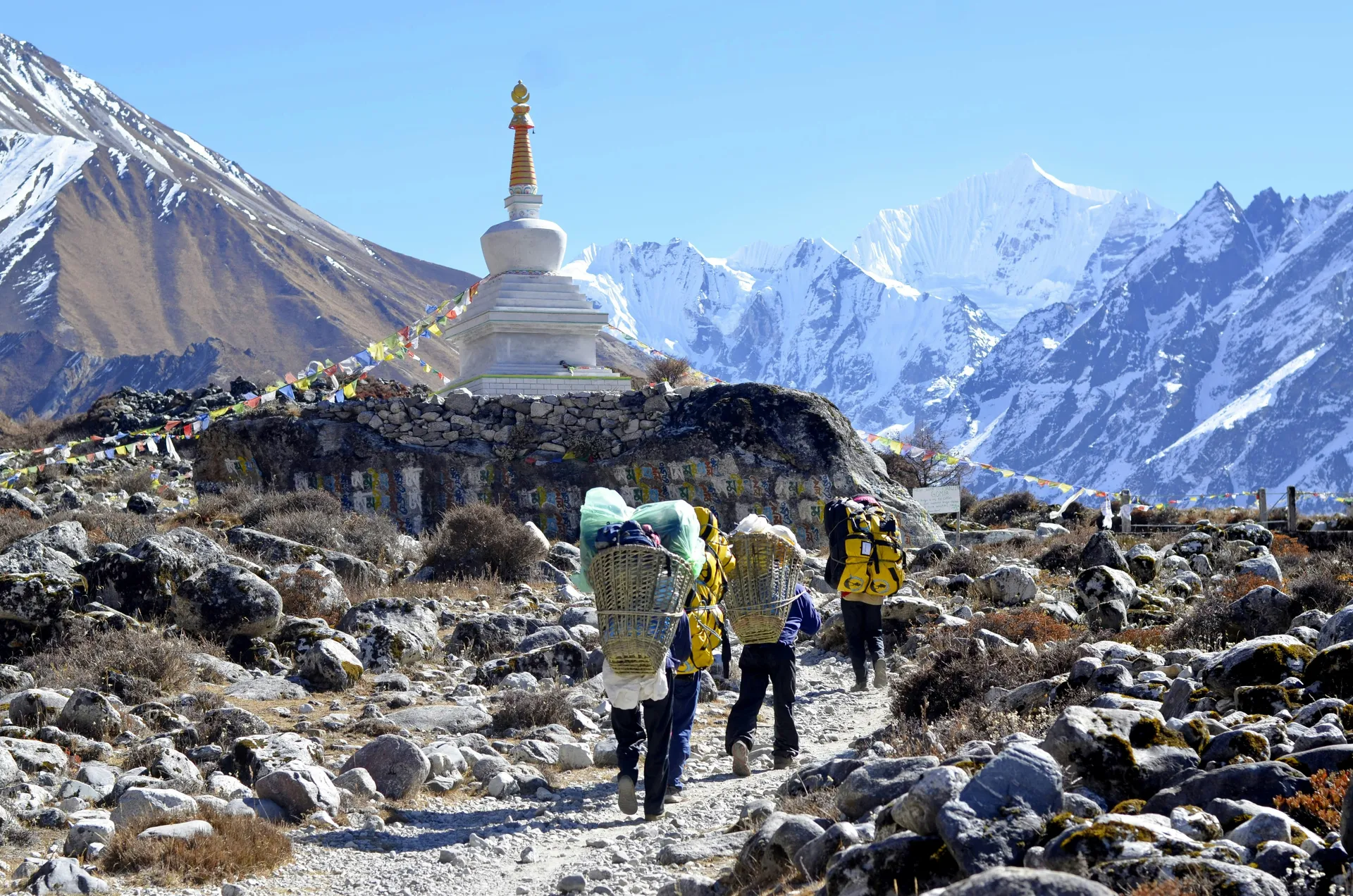
The 10-day Langtang Valley Trek takes you from Kathmandu into a spectacular Himalayan valley near the Tibetan border. Following a glacial river through oak and rhododendron forests, you pass traditional villages and yak pastures before reaching Kyanjin Gompa, a mountain settlement surrounded by snow-covered peaks. Above the valley, Langtang Lirung (7,227 m) dominates the skyline. The trek is also an opportunity to experience the culture of the local Tamang communities, whose language, Buddhist traditions and food shape life in the valley. The village of Langtang was rebuilt by its community after the devastating 2015 earthquake. Along the trail, you can explore traditional settlements, visit monasteries and mani walls, and stay in local teahouses. This 10-day itinerary follows the valley to Kyanjin Gompa, includes a full day to rest or explore the surrounding mountains, and returns along the same trail. It suits trekkers with reasonable fitness who want a mix of Himalayan scenery and cultural experiences without traveling to a more remote trekking region. If conditions and energy levels allow, you can use the extra day for an optional hike to Kyanjin Ri or Tserko Ri for wider views of the surrounding peaks.
- Kathmandu
- 10 Days
- 4,984 m
- Moderate
- 14
- Hotel, Teahouses, Lodge
- Breakfast, Lunch, Dinner
Highlights
- Reach Kyanjin Gompa (3,870 m): Spend two nights in a village with glaciers and peaks all around.
- Hike Kyanjin Ri or Tserko Ri: Climb to 4,773 m or 4,984 m on your rest day for a panorama of the Langtang range (optional).
- Walk through the forest to Lama Hotel: Pass through damp, mossy woods where langur monkeys, and with luck red pandas, live.
- Visit rebuilt Langtang Village: See a Tamang village rebuilt after the 2015 earthquake, with stone memorials and warm hospitality.
- Taste yak cheese: Try fresh cheese made at Kyanjin.
- Follow the Langtang Khola: Walk beside a glacial river all the way up the valley.
- Explore Tamang culture: Pass long mani walls, prayer wheels and small monasteries.
- Trek close to Kathmandu: Start from a single day's drive, with no flights needed.
Itinerary
Day 1: Arrive in Kathmandu (1,400 m)
Our representative will meet you at the airport and take you to your hotel. After checking in, you can rest or wander the nearby streets, depending on when you land.
In the evening, you'll meet your guide over a welcome dinner. Your guide will go through the route, the permits and what to expect on the rest day, and you can ask anything you like. If you need last-minute gear, Thamel's trekking shops are close by.
- Hotel
- Welcome Dinner
Day 2: Drive from Kathmandu to Syabrubesi (1,550 m)
Today is a full day on the road, and the scenery changes as you go. You leave the capital and follow the Trishuli River north, passing small towns, terraced hills and steep valleys. As you climb toward Dhunche, the road narrows and the air gets cooler, and the mountains start to show above the ridgelines.
Syabrubesi is a lively trailhead village on the Bhote Koshi River, close to the Tibetan border. Settle into your lodge, get to know your guide and porter, and have an early night before the first walking day.
- 7-9 hours
- Lodge
- Breakfast, Lunch, & Dinner
Day 3: Trek from Syabrubesi to Lama Hotel (2,470 m)
The trek begins with a walk along the Langtang Khola, crossing suspension bridges and passing through farming villages. The trail runs up and down for the first few hours, then climbs steadily through Bamboo and into a thick, damp forest of oak, hemlock and rhododendron.
Lama Hotel is a cluster of lodges in a forest clearing, and it feels remote and quiet. Birds sing in the trees, and langur monkeys are common. If you're very lucky, red pandas live in these woods too, though they rarely show themselves. The air gets cooler in the evening, so wrap up warm.
- 6-7 hours
- 11 Km
- Teahouse
- Breakfast, Lunch, & Dinner
Day 4: Trek from Lama Hotel to Langtang Village (3,430 m)
Today you leave the forest behind. The trail climbs through the last of the trees and then out onto open hillside, with the first big views of Langtang Lirung and its glaciers. The valley widens, yak pastures appear, and the landscape starts to feel properly alpine.
Langtang Village is a Tamang settlement that was destroyed by an earthquake and landslide in 2015 and rebuilt by its residents. You'll pass memorials on the way in, and it's worth taking a quiet moment there. The lodges are warm and welcoming, and the people are happy to share their story. This is your first night above 3,000 m, so keep the pace slow.
- 6-7 hours
- 13 Km
- Teahouse
- Breakfast, Lunch, & Dinner
Day 5: Trek from Langtang Village to Kyanjin Gompa (3,870 m)
The walk to Kyanjin Gompa is shorter than yesterday's, so you can take it slowly. The trail follows the valley floor past stone houses, mani walls and wide grazing flats, with glaciers hanging above on both sides. The mountains look bigger with every hour, and you'll cross a couple of rocky stretches where careful footing helps.
Kyanjin Gompa is a small village in a basin below Langtang Lirung, with a monastery, a few lodges and a small cheese factory. After you settle in, take a gentle stroll around the village, visit the monastery and try some fresh yak cheese. Go to bed early, since tomorrow's optional hike starts in the cold.
- 3-4 hours
- 8 km
- Teahouse
- Breakfast, Lunch, & Dinner
Day 6: Rest Day at Kyanjin Gompa; Optional Hike to Kyanjin Ri (4,773 m) or Tserko Ri (4,984 m)
Today you stay at Kyanjin Gompa and let your body adjust to the altitude. You can sleep in, explore the village, visit the monastery and cheese factory, or take a gentle walk toward the glacier valley.
If you feel strong, your guide may suggest a morning hike. Kyanjin Ri (4,773 m) is the shorter and more popular option, with a steep climb to a viewpoint straight above the village. Tserko Ri (4,984 m) is higher and takes much longer, with the reward of a huge panorama over the Langtang range and into Tibet. Both are steep and cold, and neither is required. Many trekkers skip them and spend the day resting, which is a perfectly good choice.
- Teahouse
- Breakfast, Lunch, & Dinner
Day 7: Trek from Kyanjin Gompa to Lama Hotel (2,470 m)
You retrace the valley today, and the walk feels very different going down. The air thickens with every hour, the views of Langtang Lirung stay behind you, and the trail passes Langtang Village again before dropping into the forest.
It's a long day, but a mostly downhill one, and you'll make good time with your lungs working freely. You reach Lama Hotel in the late afternoon, back in the damp forest, with the sound of the river for company.
- 7-8 hours
- 18 km
- Teahouse
- Breakfast, Lunch, & Dinner
Day 8: Trek from Lama Hotel to Syabrubesi (1,550 m)
The last walking day follows the river down through the forest and the lower villages. The trail is familiar now, and you'll notice details you missed on the way up: the waterfalls, the moss on the rocks and the farmland spreading below.
You reach Syabrubesi in the afternoon, with time for a hot shower and a celebratory dinner with your guide and porter. It's a good place to say thank you and share stories from the trail.
- 5-6 hours
- 12 km
- Lodge
- Breakfast, Lunch, & Dinner
Day 9: Drive from Syabrubesi to Kathmandu (1,400 m)
After breakfast, you drive back along the same road to Kathmandu. It's a long journey, but the scenery is a pleasant reverse of the way up, with the mountains fading slowly behind you.
You'll reach Kathmandu in the late afternoon, and the rest of the day is free for a hot shower, shopping or a farewell meal in Thamel.
- 7-9 hours
- Kathmandu
- Breakfast
Day 10: Departure from Kathmandu
After breakfast, our representative takes you to the airport for your flight. Let us know your flight time in advance and we'll plan the transfer around it. You leave with tired legs, a full camera roll and a taste of yak cheese still in your memory.
- Breakfast

Included
- Airport pick-up and drop-off by private vehicle
- Hotel stay in Kathmandu (2 nights) with breakfast, twin sharing
- Lodge and teahouse accommodation in Syabrubesi and on the trek (7 nights), twin sharing
- Breakfast, lunch and dinner during the trekking days
- Welcome dinner on Day 1
- Private vehicle for road transfers between Kathmandu and Syabrubesi
- Government-licensed, English-speaking trekking guide, with their food, lodging, salary and insurance
- Porter service (one porter for every two trekkers)
- Langtang National Park entry permit
- TIMS card, where applicable under current regulations and the confirmed permit arrangement
- First-aid kit and oximeter carried by the guide
- All government taxes and service charges
Excluded
- International flights to and from Kathmandu
- Nepal entry visa
- Travel insurance with high-altitude trekking and helicopter evacuation cover
- Lunch and dinner in Kathmandu
- Personal trekking gear (can be rented or bought in Kathmandu)
- Bottled water, soft drinks, alcohol and snacks on the trail
- Hot showers, Wi-Fi and device charging at teahouses
- Optional activities or sightseeing not listed as included
- Extra costs from delays, landslides, route closures, itinerary changes or leaving the trek early
- Tips for your guide and porter
Good to know
Langtang Valley Trek Map and Route (Syabrubesi to Kyanjin Gompa)
The Langtang Valley Trek is an out-and-back route along a single river valley. You drive to Syabrubesi, walk north up the Langtang Khola to Kyanjin Gompa, and come back along the same trail, so you see the landscape from both directions. The valley climbs about 2,300 m over three walking days, so the scenery shifts from subtropical forest to alpine meadow as you go.
The only road sections are the drives to and from Syabrubesi. On the map below, the solid line shows the trekking route and the dashed line shows the road transfers.
Langtang Valley Trek Elevation Profile and Daily Sleeping Altitude
The table below combines the 10-day itinerary with daily walking or travel times and overnight sleeping altitudes. It follows the route from Kathmandu to Syabrubesi, through Lama Hotel and Langtang Village to Kyanjin Gompa, before returning along the same valley.
Kyanjin Ri and Tserko Ri are optional daytime hikes from Kyanjin Gompa on Day 6. Since you return to Kyanjin Gompa to sleep, the highest overnight altitude on this itinerary remains 3,870 m.
10-Day Route and Daily Sleeping Altitude
Day | Route / Daily Plan | Walking / Travel Time | Sleeping Altitude |
1 | Arrive in Kathmandu | Airport transfer | 1,400 m |
2 | Kathmandu → Syabrubesi | 7–9 hrs drive | 1,550 m |
3 | Syabrubesi → Lama Hotel | 6–7 hrs walk | 2,470 m |
4 | Lama Hotel → Langtang Village | 6–7 hrs walk | 3,430 m |
5 | Langtang Village → Kyanjin Gompa | 3–4 hrs walk | 3,870 m |
6 | Rest day at Kyanjin Gompa (optional hike) | Rest or 3–7 hrs hike | 3,870 m |
7 | Kyanjin Gompa → Lama Hotel | 7–8 hrs walk | 2,470 m |
8 | Lama Hotel → Syabrubesi | 5–6 hrs walk | 1,550 m |
9 | Syabrubesi → Kathmandu | 7–9 hrs drive | 1,400 m |
10 | Departure from Kathmandu | Airport transfer | — |
Kyanjin Ri vs Tserko Ri: Which Hike Should You Choose?
Both hikes are optional and take place on your rest day. Here is how they compare:
Kyanjin Ri | Tserko Ri | |
Altitude | About 4,773 m | About 4,984 m |
Height above Kyanjin Gompa | About 900 m | About 1,100 m |
Round-trip time | About 3-4 hours | About 6-7 hours |
Best for | Most trekkers who feel well | Strong, well-acclimatized trekkers |
Included in the price | Yes, as an optional hike | Yes, as an optional hike |
Your guide recommends one, or neither, on the morning, based on how you feel and the weather. Skipping both is a perfectly good choice.
Is 10 Days Enough for the Langtang Valley Trek?
Yes, for the Kyanjin Gompa itinerary. Ten days gives you six days on the trail, a full rest day at 3,870 m and a day of driving at each end. If you want more time to acclimatize, to attempt both hikes or to extend toward Gosaikunda, a longer plan is the better choice. Ask us about a custom itinerary.
Langtang Valley Trek Cost
The 10-day Langtang Valley Trek starts at US$560 per person for groups of six or more. Guide, porter and transport costs are shared, so larger groups pay less each. The route, permits and lodges stay the same for everyone, and the price covers the services listed under "What's Included."
Price by Group Size
Group Size | Price per Person |
1 person | US$735 |
2-5 people | US$635 |
6+ people | US$560 |
We can set up private departures on dates that suit you. Contact us with your preferred dates and group size for availability, or if you want upgrades such as a better hotel in Kathmandu.
Extra Costs on the Langtang Valley Trek (Showers, Wi-Fi, Tips)
These are small costs paid in cash along the way. Figures are typical, and prices rise with altitude.
Item | Typical Cost |
Hot shower | US$2-4 |
Device charging or Wi-Fi | US$1-3 per use |
Bottled or boiled water | US$1-2 per litre |
Snacks and drinks | US$5-10 per day |
Tip for guide | US$10-15 per day, per group |
Tip for porter | US$6-10 per day |
Plan on roughly US$ 80-150 for the whole trek, depending on how often you treat yourself.
How Difficult Is the 10-Day Langtang Valley Trek?
The trek is graded moderate. You don't need climbing skills, and the trail is well used, but you'll walk five to seven hours a day for several days in a row, and the valley climbs steadily. The altitude gain matters more than the distance, and the nights at Kyanjin are cold.
Two days stand out:
Day 4 is the biggest climb, taking you above 3,000 m for the first time.
Day 7 is a long descent, which is hard on the knees.
The optional hikes on Day 6 are a separate challenge. Tserko Ri in particular is steep, high and cold.
If you can walk uphill for a few hours with a daypack and recover well the next morning, you are in good shape. See the training plan below.
Acclimatization on the Langtang Valley Trek
This itinerary climbs from Lama Hotel (2,470 m) to Langtang Village (3,430 m) in one day, a gain of about 960 m. That is more than the usual advice of adding no more than about 300 to 500 m of sleeping altitude per night above 3,000 m.
The rest of the plan is built to balance that. Day 5 gains only about 440 m, and you spend two nights at Kyanjin Gompa so your body can adjust. If you do an optional hike on the rest day, you climb high and come back down to sleep at 3,870 m, which helps acclimatization.
Our guides keep the pace slow and check oxygen levels and symptoms each morning and evening. If you want a gentler profile, ask us about adding a night on the way up.
Best Time for the Langtang Valley Trek
The main trekking seasons are spring and autumn. Conditions vary with altitude, snow and rainfall, so no month guarantees clear views of Langtang Lirung.
Spring (March to May)
Spring is the colorful season. Rhododendrons bloom in the forest below Lama Hotel, days are mild at lower altitudes and mornings are usually clear. Clouds build later in the day, and snow may remain near Kyanjin Gompa early in the season.
Autumn (September to November)
Autumn offers the steadiest weather and the sharpest mountain views, which makes it the most popular season. October is the busiest month, so book lodges and transport early.
Winter (December to February)
Winter is cold, and heavy snow can cover the upper valley. Some lodges around Kyanjin close for the season, and nights are well below freezing. Trek in winter only with up-to-date local information and a guide who can judge conditions.
Monsoon (June to August)
The monsoon brings heavy rain, leeches in the lower forest, landslides on the trail and the Kathmandu road, and cloudy views. If you're traveling in monsoon, ask us about alternatives.
Spring and autumn are generally the most practical choices. Your final decision should account for your dates, tolerance for cold, expected crowds and the latest trail and road reports.
Langtang Valley Trek Permits and Documents
Langtang National Park Permit
The Langtang Valley Trek passes through Langtang National Park, so foreign trekkers need a Langtang National Park entry permit. You should also check whether a TIMS card is required for your trek. We help arrange the necessary paperwork before departure so you can focus on the trail.
Permit / Document | Foreign Nationals | SAARC Nationals | Where to Obtain |
Langtang National Park Entry Permit | NPR 3,000 | NPR 1,500 | Nepal Tourism Board, Kathmandu, or the Dhunche checkpoint |
TIMS Card | NPR 2,000 | NPR 1,000 | Nepal Tourism Board or TAAN, where applicable |
Children under 10 | Free for the park entry permit | Free for the park entry permit | Carry proof of age |
Permit fees and TIMS requirements may change. We confirm the applicable rates and documents before your departure.
We arrange your park entry permit in advance, and your guide carries it for inspection at checkpoints along the route.
Guide Requirement and TIMS Card
Every Trip Highland departure includes a licensed, English-speaking trekking guide. Trekking rules and TIMS requirements can vary according to current regulations and the route. We check the latest requirements before your trip and help arrange any necessary documentation.
Nepal Tourist Visa
Most international visitors need a valid Nepal tourist visa, which can be obtained on arrival at Tribhuvan International Airport in Kathmandu or applied for online in advance, subject to eligibility.
Visa Duration | Standard Fee |
15 days | US$30 |
30 days | US$50 |
90 days | US$125 |
A 15-day tourist visa is generally sufficient for a 10-day Langtang Valley Trek, provided your total stay in Nepal falls within the visa period.
Check the latest visa fees, eligibility and application procedures on the official Department of Immigration, Nepal website before travelling.
Documents to Carry
Passport valid for at least six months beyond your trip
A few passport-size photos for permits
Printed copy of your travel insurance policy
Emergency contact details for Trip Highland and your own family
Paper and digital copies of every document, kept apart from the originals
Travel Insurance and Emergency Evacuation
Travel insurance is not included, and you should buy it before you fly. Your policy must cover trekking up to at least 5,000 m (if you plan the Tserko Ri hike), emergency medical treatment and helicopter evacuation. Check the policy wording for altitude limits, because some standard policies stop at 3,000 m or 4,000 m.
Langtang is remote, and evacuation can take time, so the helicopter cover matters. Your guide carries a first-aid kit and an oximeter and checks symptoms every day. If anyone needs evacuation or urgent medical care, your guide contacts our office and you contact your insurer's emergency line. Keep a printed copy of your policy number and the insurer's 24-hour number with you.
Accommodation During the Langtang Valley Trek
The lodges along the valley are simple and run by local Tamang families. Rooms usually have twin beds, foam mattresses and blankets, bathrooms are shared, and the walls are thin. Rooms aren't heated.
The dining room is the warmest spot, with a stove at the center, and everyone gathers there in the evening. Lama Hotel and Langtang Village are small and basic, while Kyanjin Gompa has a few more lodges but still keeps things simple. Hot showers, Wi-Fi and device charging cost extra. In Kathmandu, you stay in a hotel with breakfast included.
Food on the Langtang Valley Trek
Menus are broader in the lower villages and shorter higher up, since everything is carried in by porters or mules. Expect dal bhat, noodles, fried rice, soups, momos, eggs, porridge and Tibetan bread. At Kyanjin, look for yak cheese, yak butter tea and fresh cheese sandwiches. Dal bhat is the best fuel, and you can usually get seconds.
Tell your guide about any dietary needs on day one so they can pass them on to each lodge. Lunch and dinner in Kathmandu are not included.
Altitude Sickness on the Langtang Valley Trek
Altitude sickness can affect anyone, however fit or experienced. On this trek you sleep as high as 3,870 m at Kyanjin Gompa, and the optional hikes on Day 6 go up to 4,773 m or 4,984 m. The steady gain and the rest day at Kyanjin make it manageable, but Day 4 is the one to watch. Walk slowly, drink plenty of water and tell your guide how you feel.
Early Signs of Altitude Sickness (AMS)
Early symptoms of acute mountain sickness (AMS) include headache, nausea, dizziness, tiredness, loss of appetite and poor sleep. Tell your guide at the first hint. Do not keep climbing with symptoms. Mild AMS usually settles with rest and a night at the same altitude. Never go on to Kyanjin Gompa or the optional hikes just to complete the itinerary.
Serious Altitude Sickness: When to Descend
Confusion, difficulty walking straight, extreme drowsiness, breathlessness at rest or a persistent cough can indicate a serious emergency, such as swelling of the brain (HACE) or lungs (HAPE). Go down immediately, day or night, and seek medical help. Descent is the only reliable treatment.
Rules to Follow Above 3,000 m
Walk slowly, even when you feel strong
Don't go higher if you have symptoms
Drink 3 to 4 litres of water daily
Skip alcohol and cigarettes
Tell your guide how you really feel, every day, and skip the optional hikes if you feel unwell
Diamox is a prescription medicine some trekkers use to help acclimatize, but it doesn't replace going slowly, so talk to your doctor before you travel. Your guide carries a pulse oximeter, which is useful but can't rule out altitude sickness on its own.
Langtang Valley Trek Packing List
Temperatures swing from warm in Syabrubesi to freezing at Kyanjin, and the optional hikes start in the cold early morning. Your porter carries the duffel (limit 15 kg), and you carry a daypack with the essentials.
Clothing
Base layers and quick-dry trekking shirts
Fleece mid-layer
Warm down jacket
Waterproof, windproof jacket and trousers
Trekking trousers
Footwear and Accessories
Broken-in waterproof boots
Camp shoes or sandals for the evenings
Wool socks
Warm hat, sun hat and gloves
Sunglasses
Gear
Trekking poles
Headtorch with spare batteries
Sleeping bag rated to about -10°C
Waterproof duffel bag and a 20 to 25 L daypack
Health and Personal Items
Personal medication and a small first-aid kit
Blister plasters, sunscreen, lip balm and hand sanitizer
Water purification tablets
Power bank and charging cable
Leech socks or repellent if you travel in wet conditions
Langtang Valley Trek Training Plan (6 Weeks)
Start about six weeks before you travel. The aim is stamina for consecutive walking days, plus strong legs for the climb to Langtang Village and the long descent on Day 7.
Weeks | Focus | What to do |
1-2 | Build a base | Brisk walks 3 to 4 times a week for 45 minutes, plus squats and lunges twice a week |
3-4 | Add climbing | A 3 to 4 hour weekend hike with a light pack, and regular stair climbing |
5-6 | Rehearse | A long hilly hike with your daypack, a second hike the next day, and your boots on every walk |
Practise going downhill, since Day 7 is long. If you have health concerns, talk to your doctor before you travel, and don't rely on fitness alone to prevent altitude sickness.
Extend Your Langtang Valley Trek
Extension | Extra Time | Highlights |
Extra rest day at Kyanjin Gompa | 1 day | More time to acclimatize, explore, or attempt both Kyanjin Ri and Tserko Ri |
Langtang and Gosaikunda | extra days | A longer route to the sacred Gosaikunda lakes |
Kathmandu sightseeing | 1 day | Pashupatinath, Boudhanath and Swayambhunath |
Pokhara | 2-3 days | Lakeside relaxation, paragliding and local sightseeing |
Tell Trip Highland how many extra days you have and what you'd like to experience, and we'll adjust the itinerary.
Why Trek With Trip Highland?
For more than 16 years, Trip Highland has been guiding trekkers through Nepal's mountains. We know Langtang as well as the Annapurna region, and we plan this trek around steady pacing, a proper rest day and respect for the communities you'll stay with.
16+ years of experience: Knowledge of Nepal's trekking routes, mountain conditions and local communities
Valley knowledge: Guides who know the trail, the lodges and the best places to stop
Safety-conscious planning: A paced itinerary with a rest day at Kyanjin, and daily altitude checks
Personalized plans: We adjust dates, pace and extras to suit you
Authentic Tamang hospitality: Family-run lodges and the people who rebuilt the valley
Responsible travel: Respect for local communities and the environment of Langtang National Park
Langtang Valley Trek Dates and Booking for 2026/27
Tell us your preferred dates and how many of you are traveling, and we'll reply with availability, a final quote and the current permit and transport details. Autumn and spring dates fill up fastest, so get in touch early.
Enquire About the Langtang Valley Trek
Frequently Asked Questions
How long is the Langtang Valley Trek?
This itinerary takes 10 days from Kathmandu back to Kathmandu, with 6 days of trekking (Days 3 to 8), including a rest day at Kyanjin Gompa. The walking runs from Syabrubesi up to Kyanjin Gompa and back along the same trail.
How much does the 10-day Langtang Valley Trek cost?
The package starts at US$560 per person for groups of six or more.A solo traveler pays US$735, and groups of 2 to 5 pay US$635 per person. The price covers the services listed under "What's Included."
What is the highest point of the Langtang Valley Trek?
The highest place you sleep is Kyanjin Gompa at 3,870 m. The optional hikes on Day 6 reach 4,773 m at Kyanjin Ri or 4,984 m at Tserko Ri.
Should I climb Kyanjin Ri or Tserko Ri?
Kyanjin Ri is shorter and easier, and it is the better choice for most trekkers. Tserko Ri is higher and takes much longer, with a bigger view. Your guide will recommend one based on how you feel on the morning.
Is the Langtang Valley Trek difficult?
It's moderate. Most walking days involve several hours on mountain trails, and the climb to Langtang Village and the long descent on Day 7 are the hardest sections. Reasonable fitness, a slow pace and suitable equipment matter.
What is the best month for the Langtang Valley Trek?
Spring (March to May) and autumn (September to November) are generally the most popular seasons. Weather and trail conditions vary, so check the latest forecast and road reports before departure.
Do I need a guide for the Langtang Valley Trek?
Rules for Nepal's national parks have changed in recent years and are applied differently by route. Every Trip Highland departure includes a licensed guide, and we confirm the current requirements before your trek.
Which permits are required?
A Langtang National Park entry permit is required. We arrange it in advance and confirm whether any other permit or card, such as a TIMS card, applies at the time of your departure.
Do I need travel insurance?
Yes. Your policy should cover trekking up to at least 5,000 m if you plan the optional Tserko Ri hike, plus emergency treatment and helicopter evacuation. It is not included in the package, so buy it before you travel and carry a printed copy.
Is the Langtang trail safe after the 2015 earthquake?
Yes. The valley has been rebuilt, and trekkers have returned for years. Landslides can still affect parts of the trail and road, especially in monsoon, so your guide checks conditions and chooses the safest route.
How does Langtang compare with the Annapurna treks?
Langtang is closer to Kathmandu, needs no flights, and is generally quieter, with more Tamang than Gurung culture. Annapurna treks have more teahouses and more variety. Ask us if you're unsure which suits you.
Is there mobile network or Wi-Fi on the trail?
Signal is patchy and often drops higher up, especially around Kyanjin Gompa. Some lodges offer Wi-Fi for a small fee, but don't count on it.
Is vegetarian or vegan food easy to find?
Vegetarian is easy, since dal bhat, vegetable soups, fried rice and momos are on most menus. Vegan takes a little planning: ask for dishes without butter, ghee, cheese or egg, and tell your guide on day one. Yak cheese and yak butter tea are local specialties, so vegans should skip them.
How cold does it get at Kyanjin Gompa?
Cold enough that you'll want your down jacket by late afternoon. Nights are often below freezing, and the rooms aren't heated, so pack a warm sleeping bag and a hat for sleeping.
Can I book this trek as a solo traveler?
Yes, subject to availability. The solo price is US$735, since guide and transport costs aren't shared. Contact us to confirm availability.